Worcester Wall of Women
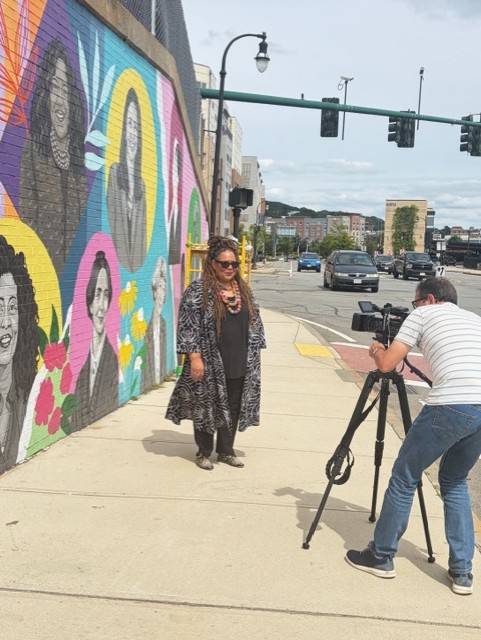
Worcester’s women have changed the world — from hosting the first National Woman’s Rights Convention to shaping education, art, healthcare, and social justice. Yet their stories are rarely seen.
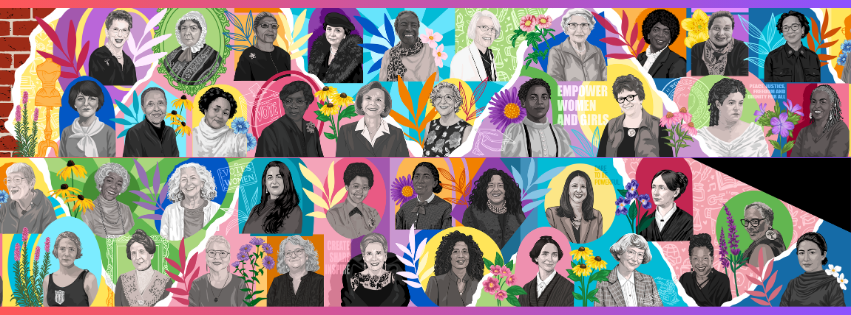
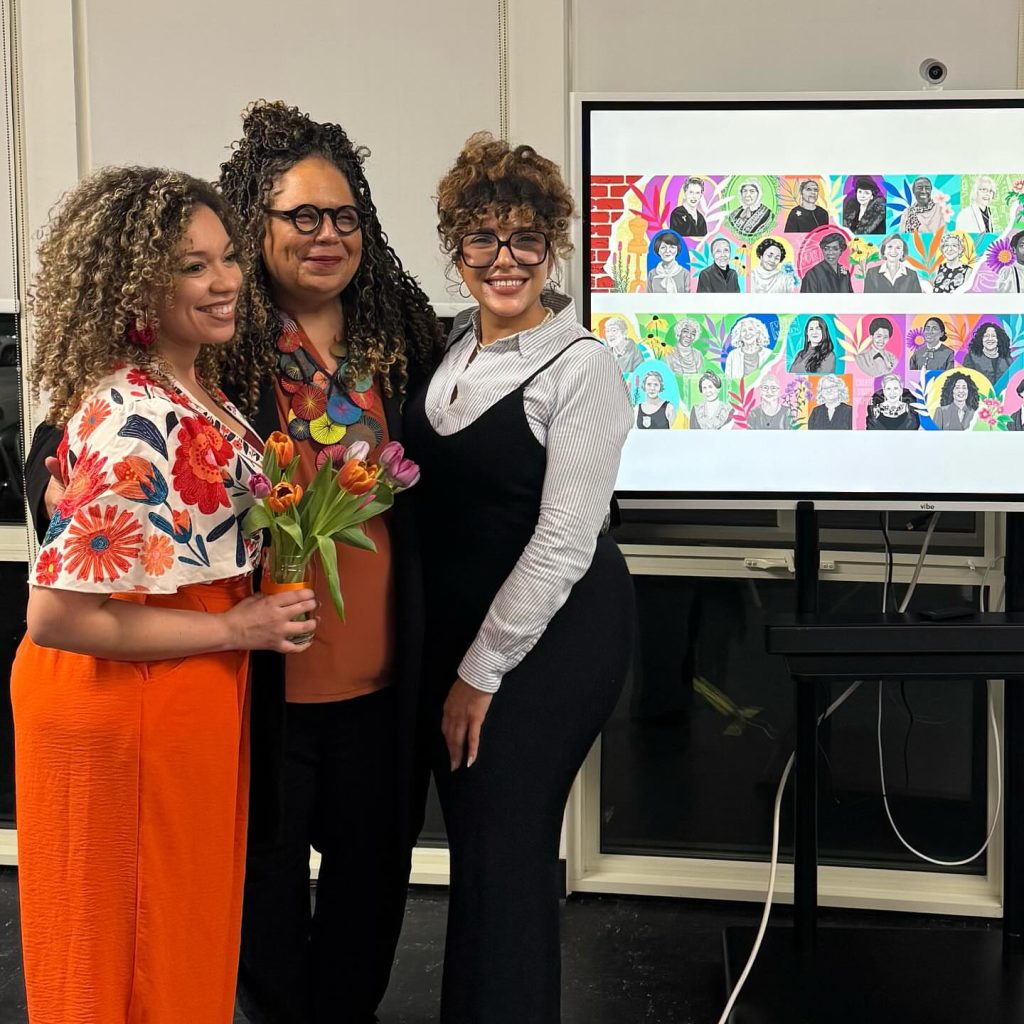
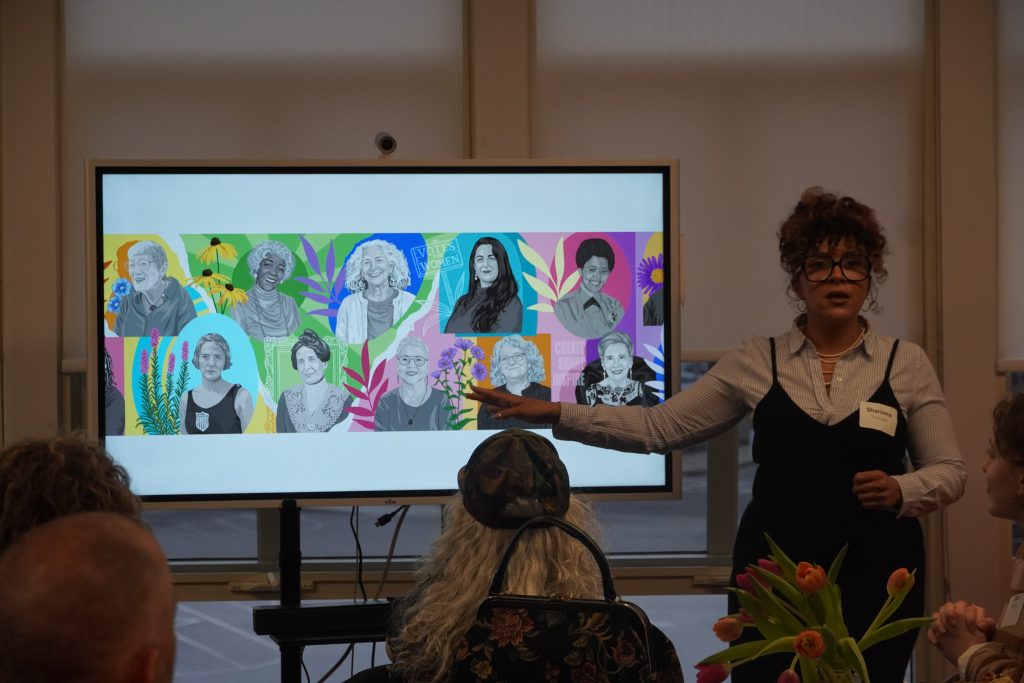
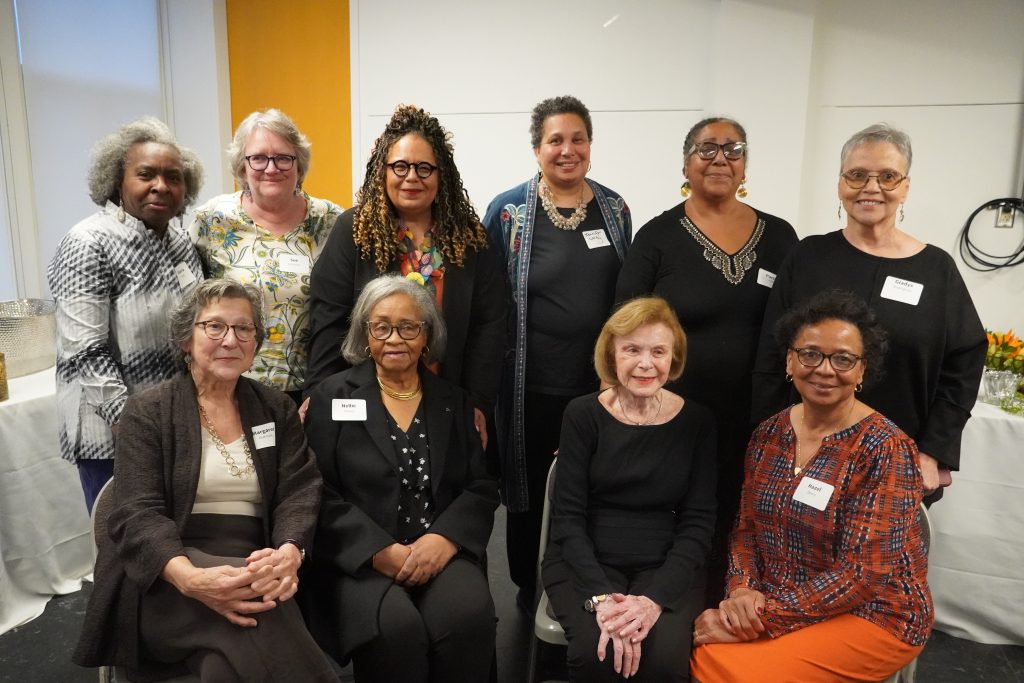
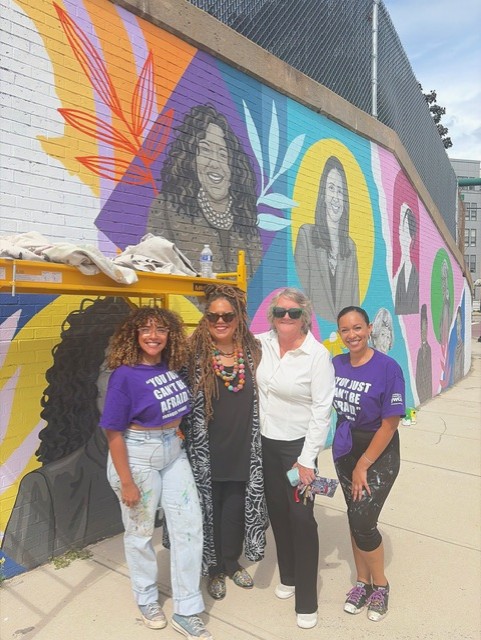
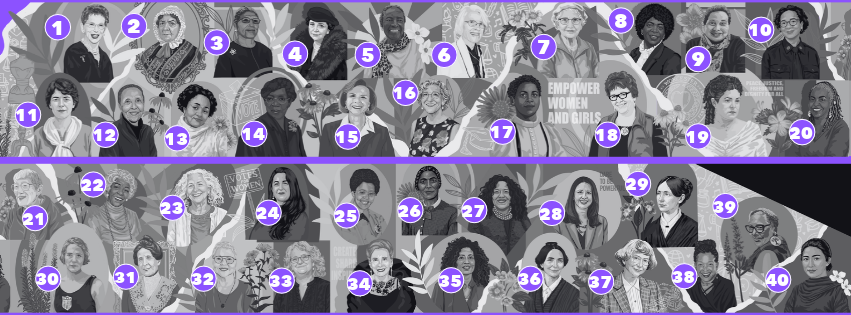
The Worcester Wall of Women will change that, turning the YWCA’s wall on Francis McGrath Boulevard downtown into a vibrant mural honoring 40 remarkable women from Worcester’s past and present.
The Worcester Wall of Women is more than a mural — it’s a tribute, a history lesson, and an inspiration for generations to come. Be part of this historic project. Together, we can celebrate the women who built Worcester and inspire the leaders of tomorrow.
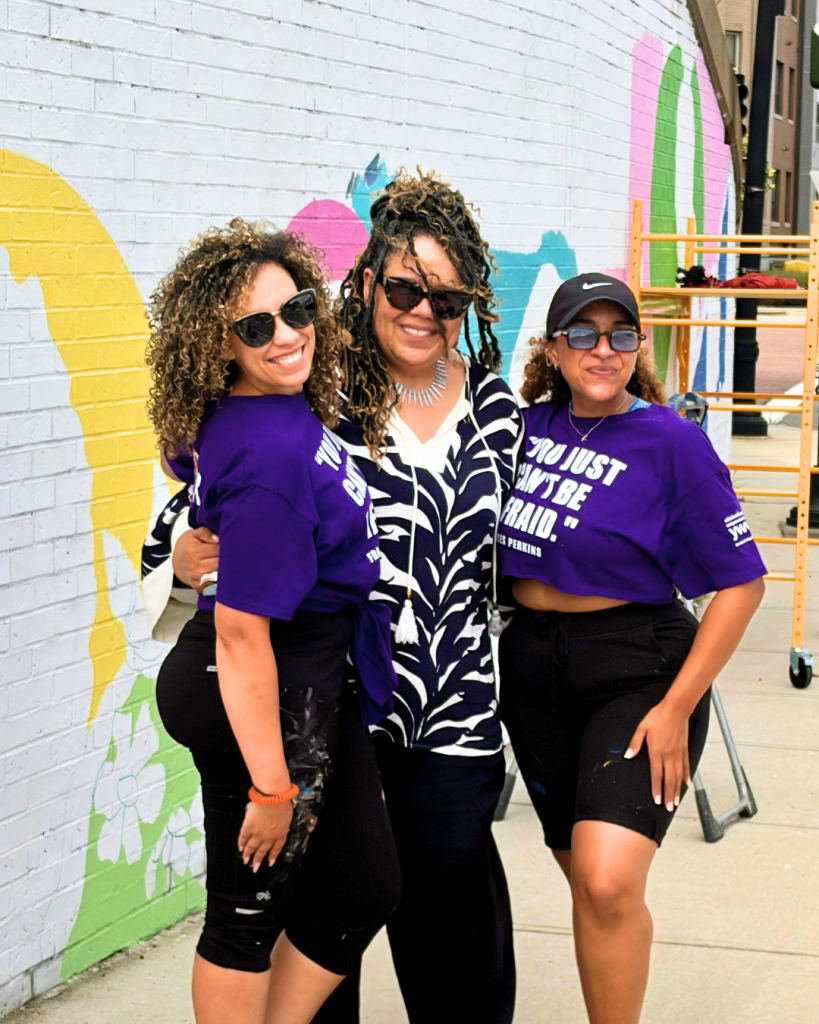
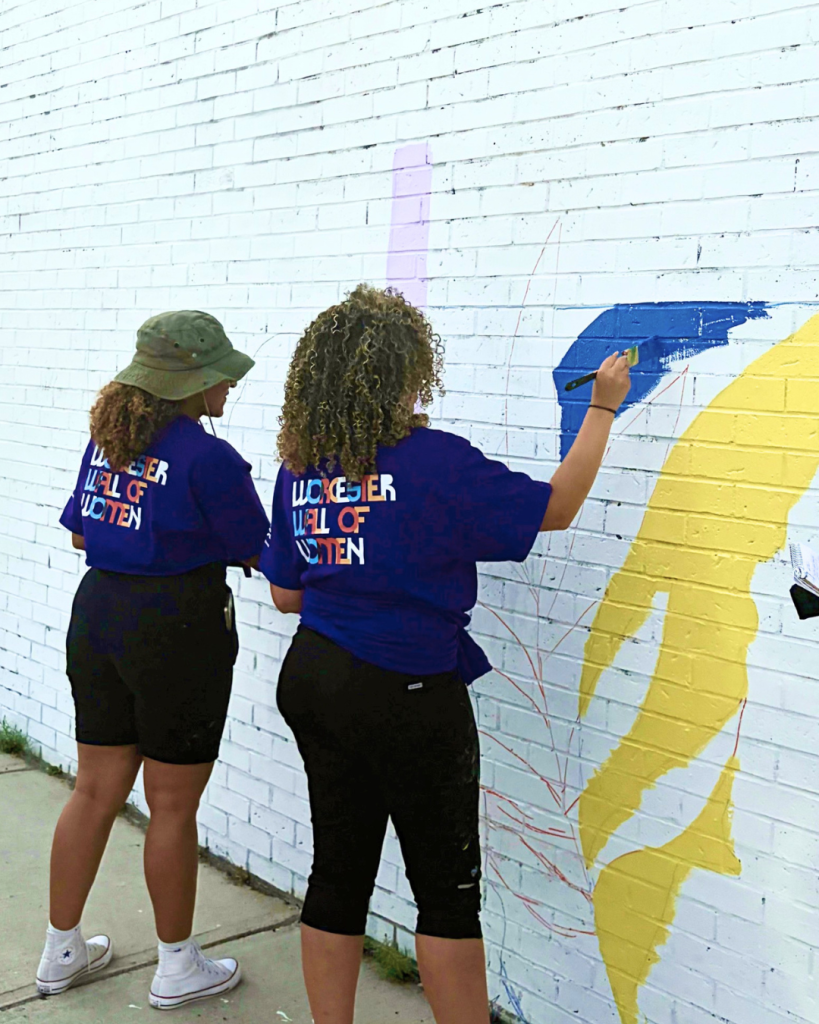
The mural has been created by Lead Artist, Sharinna Travieso and Contributing Artist, Jennessa Burks
To schedule a walking tour of the mural with the artists, please email: info@ywcacm.org
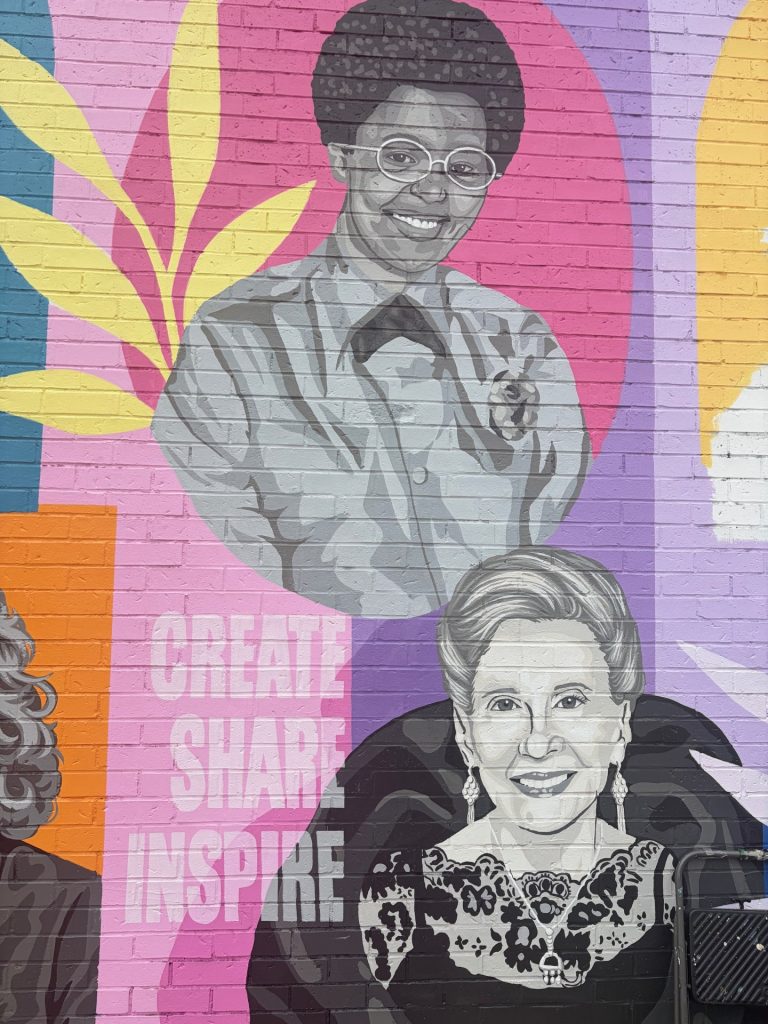

Lois Green, Community Advocate
 Lois Ellen Bishop was born in 1930 in West Hartford, CT. She earned a B.A. in English literature from Bryn Mawr College in 1952. After college, she married Robert Green, and the two moved to Worcester. Here in Worcester, Lois raised her four children before going back to school in her mid-50s to earn an MPA from Clark University.
Lois’s personal mantra and advice to others was “Always have something to do.” For her, this meant being deeply involved in her community, as an innovative advocate and leader. She was especially interested in serving the needs of the elderly. She founded and served as the Executive Director for Elder Home Care Services of Worcester, whose programs included in-home counseling to older alcoholics – the first of this type of program in the state. She founded and served as President of the Better End Partnership, a community organization dedicated to enhancing quality of life for those nearing its end. She was the first Director of the Geriatric Community Clerkship at UMass Medical School, a position focused on healthcare, education and research for older adults. She founded and became the first President of the Bet Shalom Housing for the Elderly, an affordable and supportive apartment community for older residents.
Outside of elder care, Lois worked with Meredith Wesby to found the Women’s Initiative, an organization whose goal was to raise funds to “prevent and reduce violence in the lives of adolescent girls in the community.” Lois was an exceptional fundraiser, securing funding for many non-profit organizations. She was the first woman campaign chair for the United Way of Central MA, for whom she served as interim President and CEO in 2005.
Lois received numerous community awards, and several honorary doctoral degrees from area colleges and universities. She continued her work through several bouts of cancer treatment, dying in 2010 from cancer-related complications.
Hepsibeth Bowman Hemenway
Nipmuc Member
Hepsibeth Bowman/Crossman Hemenway was the daughter of a Nipmuc woman and a white man during an era when society viewed such a union as not only improper but also illegal. Her father left the family to serve in the Revolutionary War when Hepsibeth was a teenager, allegedly dying during his military service.
After the death of her mother, in her twenties she took work in the household of local judge Timothy Paine in Worcester until meeting and marrying Jeffrey Hemenway, a man almost twice her age who had served in multiple colonial battles and had earned a pension for his Revolutionary War service. He was one of the first persons of color to own property in the city. They lived in a small house on the outskirts of town on what is now May Street, with Jeffrey working as a carpenter and Hepsibeth doing the back-breaking work of a laundress, also taking in boarders to supplement their income while raising eight children.
After Jeffrey’s death in 1819 she moved downtown to a house that abutted the Mechanic Street burial ground, hanging her laundry on clothes lines that fluttered over headstones. Celebrated as an excellent cook and baker, having served her roast pig to townspeople at the city’s first Fourth of July celebration in 1789, she became even more famous for her wedding cakes, made for the city’s rich and prominent families. The typical wedding cake of that era was a fruit cake that could weigh between fifteen and two hundred pounds, depending on the guest list, and would be frosted and decorated, perhaps with flowers or attractive leaves. In addition to her fame as a baker, Hemenway is the subject of a portrait in the collection of the Museum of Worcester, an unusual legacy for a woman from such a humble background.
Ogretta V. McNeil ,former school committee member and Holy Cross professor
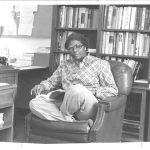
Dr. Ogretta V. McNeil was a trailblazer whose leadership transformed Worcester’s classrooms, colleges, and community.
Born in Savannah, Georgia and raised in Washington, D.C., Dr. McNeil graduated with honors from Dunbar High School and began her career at the National Institutes of Health. She later earned her Doctorate in Psychology from Clark University, bringing both her scholarship and her vision for equity to Worcester.
In 1969, she became the first Black woman to serve on the faculty at the College of the Holy Cross — a historic milestone.
During her eight years there, she helped create a more welcoming environment for Black students, advised the Black Student Union, chaired her department, and played a key role in establishing the college’s Africana Studies concentration. She was respected not only as a pioneer, but as a powerful teacher, mentor, and leader who advanced early diversity, equity, and inclusion efforts on campus.
After retiring in 1997, Dr. McNeil continued her public service on the Worcester School Committee for ten years, advocating fiercely for educational equity and opportunity for every student.
In 2023, a Worcester street was renamed in her honor — a lasting tribute to a woman whose courage, integrity, and determination strengthened the city she served and opened doors for generations to come.
Frances Perkins, United States Secretary of Labor.
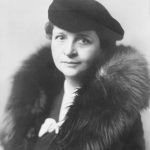 Frances Perkins grew up in Worcester and graduated from Classical High School where she excelled at debate, an early sign of a career in advocacy. She continued her studies at Mount Holyoke College (with a physics major and chemistry and biology minors) where, for a course in American economic history, she visited mills along the nearby Connecticut River for first-hand viewing of her textbook material. “From the time I was in college,” she wrote, “I was horrified at the work that many women and children had to do in factories … I was … inspired with the idea of reforming, or at least doing what I could, to help change those abuses.” She next worked as a teacher and social worker including at Chicago’s famous Hull House, a “settlement house” for the poor and unemployed. After earning a master’s degree in sciology and economics she became Executive Secretary of the Consumers’ League of New York which pushed for better working conditions especially for women and children. On March 25, 1911, she witnessed the Triangle Shirtwaist Factory fire in which 146 people died, many by jumping from the building’s upper floors. That experience focused the trajectory of Perkins’ career. By then a go-to for insights on the health and safety of American workers, she became a key member of the Committee on Safety formed post-Triangle fire. New York ended up with the nation’s most extensive set of laws governing worker health and safety. She became a labor advisor to four-term New York governor Al Smith and continued in that role for the state’s next governor Franklin Delano Roosevelt. When Roosevelt began his multiple presidential terms in 1933 he selected her as his Secretary of Labor, making her the first woman appointed to a Cabinet position, a job she held from 1933-1945. She advocated for and helped implement social programs and legislation during the Great Depression including the Civilian Conservation Corps (1933), the National Industrial Recovery Act (1933), the Social Security Act (1935), the Fair Labor Standards Act (1938). Of her work she once said: “You just can’t be afraid. You can’t do any of the things we did in the early part of the century if you’re afraid.”
Edna Spencer, Trailblazer. Equity Champion. Community Leader
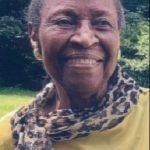 Edna Spencer was a pioneering force for racial equity, educational access, and community empowerment in Worcester, Massachusetts. Born in Chattanooga, Tennessee the whole family migrated north to Worcester in the 1930s.
She began her high education journey at Quinsigamond Community College earning her associate’s degree, before continuing to Clark University, where she graduated “cum laude” with her bachelor’s degree and later earned a master’s degree.
Spencer became the first Black woman to Chair the Board of Trustees at Quinsigamond Community College and the first Black woman to serve as the President of the YWCA of Central Massachusetts. She later served as the Director of Diversity and Affirmative Action at Worcester State University. In recognition of her impact, Worcester State University dedicated the “Edna P. Spencer Student Lounge” in her honor.
Following the loss of her daughter, Olivia Rochelle Spencer-Marley, Edna and her husband, Corneilus, established the Olivia Rochelle Spencer Memorial Scholarship in partnership with Worcester State University in 2006.
Spencer’s civic engagement extended throughout Worcester, including service on the MLK Community Youth Breakfast Committee, the Henry Lee Will Center, the African Heritage Festival Advisory Committee, and Committee for Equal Access for Worcester Vocational Schools.
Edna P. Spencer earned numerous awards, including the National Conference for Christians and Jews Brotherhood Award, the MLK Community Service Award, the Massachusetts Teachers Association Civil Rights Award, as well as being awarded two keys to the city of Worcester for outstanding community influence.
Through courageous leadership and steadfast advocacy, Edna Spencer helped shape a more just and inclusive Worcester whose impact continues today.
Meridith Wesby, Community Advocate
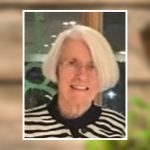 Meridith Daniels Wesby was born and raised in Worcester, MA. She attended Smith College, earned her BA and MBA from Clark University, and later earned a degree in Landscape Design from Radcliffe College.
In her thirties, Wesby was recognized as one of the outstanding Young Women of America and as an outstanding Young Leader of Worcester, due to her impactful work with many non-profits.
While her connections and talents were numerous, she channeled her efforts primarily towards the needs of young girls and women.
She was the President of the Junior League of Worcester and for many years worked with the United Way of Central Massachusetts. There she met Lois Green and the two began the collaboration that would result in the formation of the Women’s Initiative in 2002.
In honor of Meridith’s work, a special award was created, called The Meridith D. Wesby Young Leader award. This award was presented by the Women’s Initiative of the United Way of Massachusetts, to celebrate young women who exemplify Meridith’s values of volunteerism and leadership.
She showed her leadership skills to other organizations including the American Antiquarian Society, where she served as Recording Secretary for eight years and the Worcester Garden Club. She was Vice President of the Fred Harris Daniels Foundation Board.
Meridith Wesby’s advocacy helped pave the way for women and girls of Worcester and beyond.
Katharine Forbes Erskine, Suffragist. Civic Leader. YWCA President
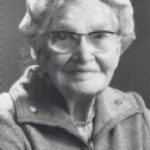
Katharine Forbes Erskine was a pioneering civic leader whose lifelong commitment to women’s leadership and public engagement helped shape Worcester and the mission of the YWCA.
Born in Westborough, Massachusetts in 1880, Erskine moved to Worcester at age nine. While attending Vassar College, she became an active organizer in the women’s suffrage movement, convening peers for debate and advocacy at a time when women’s political participation was widely discouraged. After graduating in 1911, she studied law at Wellesley College and continued her suffrage work before returning to Worcester.
Erskine devoted decades to expanding women’s voices in civic life. She was a charter member of the League of Women Voters, served on the local school committee, and became a two-time President of the YWCA of Central Massachusetts in 1930 and 1960. During her many years of service, she worked across nearly every YWCA committee and founded the Dialogue Group, creating space for women to discuss social issues, current events, and shared challenges.
Living to the age of 100, Katharine Forbes Erskine left a legacy of leadership, equity, and community engagement. The Katharine Forbes Erskine Award, established by the YWCA in 1994, continues to honor women who embody the values she advanced throughout her life.
Betty Price, Worcester Community Activist and School Committee Member
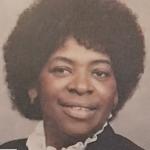 Elizabeth “Betty” Price led a life dedicated to creating community and helping others.
Price was born in 1934 in Depression-era Worcester and was one of ten siblings in a working-class Black family. She attended Thomas Street School and continued her education at Commerce High School, and after graduating, was denied a job, despite her impressive test scores, due to a racist policy. She subsequently obtained her master’s degree, her LICSW, became an ordained a minister and at the time of her death, was working towards her PhD.
Price co-founded Prospect House in 1964. It was the largest minority based social service agency in New England. This organization functioned as a community center, aimed at serving minority populations by connecting people with resources such as tax assistance, food, housing, employment opportunities, and cultural exchange.
In 1973 she was elected a member of the Worcester School Committee, running on values of homework policy, tutorial assistance, and SAT preparation becoming known as the first Black woman to ever hold public office in Worcester. She served from 1973 to 1979.
In 1983 Betty was one of 7 appointed to re-write the charter, Worcester’s current municipal government structure. She also participated in many organizations, such as the State Advisory Board for Community Education, Worcester Human Rights Commission, NAACP, and numerous others.
In recognition of all her incredible contributions towards social justice, Betty Price was named the 1982 Woman of the Year by the Massachusetts Legislative Black Caucus. An accessible playground was created in her honor after Betty Price passed away in 1992 at the age of 58 from cancer.
Price left behind an inspiring legacy of community building and civic duty to those who need it most.
Jennifer Davis Carey, Worcester Education Collaborative Founder
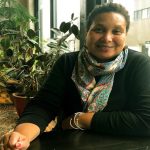 Jennifer Davis Carey grew up in Brooklyn, New York, with roots in the Caribbean and American South.
Carey obtained her bachelor’s degree in psychology from Radcliffe College and both a master’s and Ed.D from the Harvard School of Education,
Her professional career started in administration at Ohio University. After returning to Massachusetts she worked at Harvard University in the undergraduate admissions office serving as Director of Minority Recruitment and then in a variety of positions at Bancroft School. A lifelong Democrat, she transitioned into public service working as a special assistant for Governor Paul Cellucci, then working at the office of Consumer Affairs and Business Regulation under Governor Jane Swift. Jennifer also served in Governor Mitt Romney and briefly in Governor Deval Patrick’s administrations as Secretary of the Executive Office of Elder Affairs.
In 2010 she returned to education as founding Director of the Worcester Education Collaborative (WEC) the mission of which is to advance excellence and equity in the Worcester Public Schools. She retired in 2025 after fifteen years growing the organization in scope and impact.
Carey is also a practicing artist whose work in the mediums of photography and vitreous enameling. Her work focuses on themes related to mythology, women, and African American history and culture. Her work has been featured in the Fitchburg Art Museum, Museum of Friends in Colorado and numerous galleries in Massachusetts and New York.
Jennifer Davis Carey’s contributions to public education and to the quality of life in our city continue.
Hazel Berry
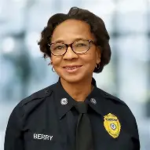
Hazel Berry dedicated her career to empowering people of color and helping those in need. In 1978, while working as a clerk at a local Worcester hospital, she came across a notice encouraging minorities to take the civil service exam for the Worcester Police Department. She decided to take a chance, and in 1980, she became a police officer.
Hazel was among the first women of color to join the Worcester Police Department. In 1982, she became the first woman of color assigned to the Detective Bureau, where she investigated missing persons cases, crimes against youth, sexual assaults, and child abuse. She served as a detective in the Special Crimes Unit and was also a member of the department’s Police Minority Recruiting Team, helping introduce policing as a career opportunity to racial minorities in the area.
Throughout her career, Hazel worked with victims of domestic violence, assault, and child abuse, demonstrating her commitment to supporting those most in need. In 2016, after 36 years of service to Worcester, she transitioned to a new role as a Campus Security Officer with the police department at Massachusetts College of Pharmacy and Health Sciences at its Worcester campus.
Beyond her law enforcement career, Hazel has remained actively involved in organizations dedicated to racial and gender equality, including Black Pathways for Change, the Black Clergy Alliance, and the YWCA. In 2017, the Worcester Senior Center and African American Elder Group recognized her for her 36 years of service to the citizens of Worcester.
Through her career and community involvement, Hazel Berry has worked to challenge racial and gender bias and advance a more equitable community for all.
Mary Heintzelman Gillford Bowne, the founder and CEO of Corset H. Corset H.
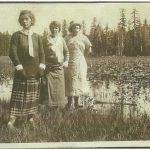 Born in a small Ohio farm town in 1870, Bowne developed sewing, sales and manufacturing ;kills over decades, first in London and Springfield, Ohio then in New York City’s SoHo district. “I studied anatomy,” she explained, “and surgery and everything I could get on the subject .. .I took the corset I was wearing. I slashed it in a dozen places and set about to give it shape and curve by inserting gussets and reconstructing its contour generally.” Her time in New York City catapulted her to national fame as the inventor of the “straight front corset” such as the Sapphire pictured here. Over the years she applied for various patents for improvements to the garment that was then required wearing for women around the world. Arriving in Worcester as the 20th century began, she had by then a global reputation as an accomplished and innovative designer. Worcester at that time was a world capital of production for that undergarment. Mary opened her first corset-making business in a renovated space near City Hall in 1904 during an era when female heads of manufacturing facilities were a rarity. By 1910, volume had expanded so much that a new manufacturing space was built, a three-story building on Jackson Street with modern amenities such as phone service throughout the building, multiple elevators, a sprinkler system and even a hospital room. She ran the factory for over fifty years while also operating a national chain of retail corset shops. “Ivy Corset … it clings” was the sales pitch for the company’s most popular product.
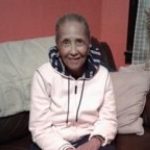 Dr. Shirley Carter, a nurse, educator, and community leader who broke through racial and gender barriers with her accomplishments, laid the path for future generations of African American women in Worcester and beyond. Dr. Carter was born Shirley Barrow, on October 26, 1931, and was raised in Worcester, Massachusetts. She was married for a short time, and had two children. She became one of the first two African American graduates from the Worcester City Hospital School of Nursing, along with her sister Audrey. Her groundbreaking role as one of the first African American nurses to graduate from WCHSN opened doors for other Black women to follow in her path and set an example of traversing racism and sexism through perseverance and faith.
From an early age, Shirley balanced multiple jobs and responsibilities, which didn’t deter her from her path. Not only was Shirley aiming for her nursing degree, but she also pursued a degree in instructional leadership. She served in nursing, teaching, and leadership roles, such as a professor at Springfield College. Dr. Carter actively advocated for the respect and equity of women in the workplace and society throughout her life. Carter is a prime example of how important it is to document and keep track of our history because it can help contribute to community belonging and empowerment. She wrote an autobiographical book, Colored, of Course, along with several other books about Black life.
Nellie P. Toney
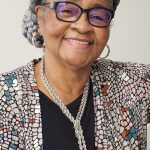 Nellie P. Toney was born and raised in Worcester, Massachusetts. She identifies as Black and Nipmuc and serves on the Elders Council for the Hassanamisco Nipmuc Band. For decades, she has been deeply involved in the life of the Worcester community, helping to bring people together through civic, cultural, and faith-based networks.
After graduating from high school, Nellie attended Salter Secretarial School while raising her family. In 1978 she began working at UMass Chan Medical School, first in the Public Relations department, Staff assistant for four Chancellors and later as Program Coordinator for the Diversity and Equal Opportunity Office. In that role she helped organize cultural celebrations and cultural awareness programs that encouraged dialogue and understanding across Worcester’s diverse communities. She retired after 34 years of service.
Outside of her professional work, Nellie devoted enormous energy to community life in Worcester. She served as a convener among the city’s Black churches and remained actively involved as a member of the YWCA board and the YWCA’s Daybreak program. She also played a long-standing role in Worcester’s annual Reverend Dr. Martin Luther King Jr. Community Breakfast, one of the city’s most significant community gatherings.
After years of involvement with the event, Nellie became co-chair of the MLK Breakfast committee in 1995. In that role she helped organize the program for hundreds of attendees each year, coordinating speakers and helping lead student essay and art contests that engaged young people across the city. Her leadership helped sustain the breakfast as a space where Worcester residents could gather to honor Dr. King’s legacy and reflect on the continuing work of justice and community responsibility.
Through decades of steady involvement—within churches, civic organizations, and cultural programs—Nellie P. Toney has helped strengthen the networks that hold Worcester together. Her work reflects a deep commitment to community, service, and the belief that collective efforts can shape the life of a city.
Sarah Ella Wilson, Educator & Social Justice Advocate
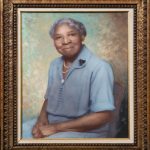 Sarah Ella Wilson was an inspiring Worcester educator and community leader following the era of slavery. Wilson was born on April, 7 1873, to George Wilson and Elizabeth Allen Wilson in Worcester, MA. Just ten years prior to her birth, Wilson’s parents were enslaved on a Virginia plantation. They met and became great friends with abolitionist Sarah Chase, and moved north to Worcester for opportunity and acceptance. This is why Wilson’s parents named her Sarah. Growing up, Sarah Chase served as a mentor to Sarah Ella Wilson; educating her, traveling with her, and enlightening her with new surroundings and intellectual thinking at such a young age. It was this childhood that led Sarah Ella Wilson to find such an appreciation for education. Wilson graduated from Belmont Street School as a child, Classical High School around 1891, and Worcester Normal School in 1894, which is now Worcester State University, where she earned her degree in teaching. Shortly after graduation, Wilson became a teacher at the Belmont Street School, where she taught for nearly fifty years. Wilson paved a path by becoming one of the first Black Women to ever teach in the Worcester School system. Wilson was also co-founder, Vice-President, and Auditor of the Home for Aged Colored People, Treasurer of the Northeast Federation of Women’s Clubs, member of the Levana Club, member of the Women’s Service Club of the YWCA, member of Worcester’s Inter-Racial Council, and a member of National Association for the Advancement of Colored People. Wilson was devoted to bettering the situation and opportunities of Black Women. Wilson said, “[t]he scheme of operation of all Colored Women’s Clubs is directed always for the benefit of the race… [c]olored women of education band together to fill the particular community need of others of their racial group.” (Telegram, 10/8/33) Sarah Ella Wilson’s legacy is remembered as an educator who did not let her environment constrain her, but instead used her education for the advancement of others. Today, a portrait of Sarah Ella Wilson, which was restored through efforts by the Worcester Art Museum, is on display in the entrance of Belmont Street School; a fitting place to remember Wilson’s honor.
Harriet Chandler, Former Massachusetts State Senator
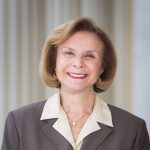 As an educator, Worcester School Committee Member, and Massachusetts State Senator, Harriette L. Chandler has spent her life fighting for women’s rights and gender equality.
Harriette was born in 1937 in Baltimore, Maryland and grew up in the neighboring state of Delaware. Harriette was an only child, and her mother and father, a nurse and a lawyer, always encouraged her to be ambitious and chase her dreams, instilling in her a sense of confidence from a young age.
This drive led Harriette to Wellesley College where she earned her Bachelor of Arts degree, the first of her four degrees, proving her lifelong dedication to education. After Wellesley, Harriette taught at Worcester’s North High School as a Social Studies teacher. After two years in this position, she went back to school to earn her Master’s degree from Clark University. At this time Harriette and her husband Burton Chandler were both in school causing expenses to be tight, but after her first year, Harriette earned a full scholarship funding her degree. Now a mother, Harriette’s ambition was unaltered. She went back to Clark University to earn her PhD, which she completed in seven years.
Harriette worked at Clark, WPI and Tufts. After leaving the classroom, she pivoted and took a job as the Director of the Women’s Committee at Brandeis, a group dedicated to keeping the Brandeis library funded and well managed. This was during an important and dynamic time when increasing numbers of women were joining the workforce. From there Harriette again went back to school to earn her MBA at Simmons College.
After earning her MBA Harriette started working in high tech and commuting to Boston. After about eight years she quit her job to move her her sick mother, who was battling breast cancer, from Delaware to Worcester. She started to notice the struggles Worcester was having in getting people to move here, largely due to its issues with the schools, and decided to make use of her education and run for Worcester School Committee. After winning by a landslide, Chandler became the first woman on the committee in many years.
Not long after her mother’s passing, and only a years into politics, Harriette herself was diagnosed with breast cancer. Already, one of the few women in her position and still fairly new to the job, she didn’t want to appear weak among her colleagues or in front of her constituency. Harriette put on a wig and strategically planned her chemotherapy treatments so they would not interfere with her work. This setback did not extinguish Harriette’s persistent determination.
After serving one and a half terms on the Worcester School Committee and already breaking the standard for working women of her generation, Harriette ran for a seat in the Massachusetts House of Representatives in 1995. She then became the first woman from her district to be elected State Senate in 2000. Her first piece of legislature was the 48-hour bill, which guaranteed women 48 hours in the maternity ward after giving birth. It is because she had gone through this experience herself, that she knew of its importance enough to make this change. She then spent 22 years serving district one in Worcester, with one year as Senate President, from 2017 to 2018. Her passion and involvement in striving for women’s rights, healthcare, quality education, and so much more didn’t stop with electoral politics.
As an active and dedicated leader and member of the Worcester community, Chandler remained involved as a member of the Worcester Women’s History Project, The Worcester Art Museum, Worcester Democratic City Committee, and a corporator of the YWCA, and many other organizations which are dedicated to changemaking and civil rights. Throughout her career, Harriette helped to empower and serve women through creating and promoting legislature which helped to create fairness in the lives of the everyday people she served.
Judge Margaret Rose Guzmán, United States District Judge
 Judge Margaret Rose Guzman was born in 1960 in Worcester, one of 8 children. Due to internal familial complications, Guzman did not have the financial opportunity to attend college right after high school, but at the time, did not know what she wanted to be. She moved to Florida, eventually meeting a young public defender who she worked for. This moment inspired her to set a path for her life. Within weeks, she returned to Worcester County and sought out colleges that would still accept her without SAT scores, since the SAT was still fairly new. She started at the University of Southern Maine in Portland, and transferred to Clark University as a second-semester sophomore, graduating from Clark University in 1989 with high honors.
She began her legal education at Boston University and earned her Juris Doctor from the Boston University School of Law in 1992. During this time, she also served as a legal intern for the Mintz Levin Law firm in the spring of 1991. After achieving her JD in Boston, she returned to her hometown of Worcester to work as a trial attorney for the Committee for Public Counsel Services, which led to her serving as a public defender for the next 15 years. During her time as a public defender, she noted that for years at trials, she was often the only woman in the room, but she never let that impede her work, focusing on her role as an advocate and never letting herself get distracted by “unimportant circumstances.”
She was aware of the additional obstacles that she would endure as a woman in law, but that only gave her reason to work harder. She would often be overprepared for court appearances and hearings, thoroughly knowing the facts and arguments, which helped her reputation as a lawyer. She then noted in an interview that she “spent a lot of time observing various judges” and “also took opportunities to ask lawyers [annoying] questions.” Many of these lawyers, she said, gave her advice she continues to use to this day. “Judges came to see me as a lawyer whose work and word spoke for itself. And I had a great working respect from my clients.” She enjoyed her job defending her clients, but in late 2008, she began to consider some recommendations that she had received, prompting her to rise throughout the judicial system. In 2017, she became a State Court Judge in Worcester; her appointment was significant because she was only the second woman at this level in Worcester, and she also had deep connections to the city as a whole. Later she felt the “satisfaction in bringing my decades of trial experience to the thousands of cases I dealt with daily, having great empathy, but also recognizing the need for fair and timely decisions.”
On July 13, 2022, Judge Margret R. Guzman was nominated by President Biden to the United States District Court for the District of Massachusetts and was confirmed on March 1, 2023. Throughout Judge Guzman’s life, she has shown her significance within Worcester City; her time as a student at Clark and her 15 years as a public defender have demonstrated her commitment to the city and its progress. Her role as a woman in law stands as a testimony to advocate for a more diverse judicial system, but as once said to Judge Guzman, “…it isn’t enough to be the first. There must be a second for real change. It is important to put your hand out and pull someone along. Now, go do justice…”
Jennie Cora Clough Busby,
Educator
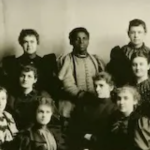
Jennie Cora Clough Busby was born on January 28, 1857, in Worcester Massachusetts, to a family whose tenacity and civic commitment inspired others in the African American community. Her maternal grandfather, Peter Rich, was born enslaved, but later gained his freedom. He eventually became one of the very few Black property owners in Worcester prior to the Civil War. Jennie’s family, and especially her parents Francis A. Clough and Harriet Clough, had a history of overcoming systemic barriers. The Clough household strongly emphasized the importance of pursuing academics and questioning social norms. Growing up in this positive environment, Jennie developed the belief that education was not only a privilege, but also a form of community service. In a city like Worcester with a complex racial history, her early experiences shaped her understanding of race and gender.
Jennie attended Worcester’s English Classical School, as one of the few Black students enrolled at the time. Public education in the late 19th century was still a contested space for African Americans, especially for Black women who faced both racial and gender-based prejudice. Jennie’s enrollment at the English Classical School placed her in an integrated academic environment long before the inclusion of both white and Black students in the same classroom was widely accepted. She excelled academically and became the first Black woman from Worcester admitted to the Worcester Normal School (later known as Worcester State University). Jennie graduated from Worcester Normal School in 1878, an achievement not only for her, but for the city’s African American community. At a time when opportunities for women in higher education were extremely limited and effectively nonexistent for women of color, her success reverberated through her community and represented a powerful act of social progress. At the time, Normal schools were designed to train teachers, and through this education Jennie was able to complete her studies and enter teaching as a profession. Teaching was one of the few careers open to educated women in the 19th century, and seeing as how it was unheard of for a Black woman to secure a teaching position in an integrated public system, many deemed this a turning point for women of color.
After her graduation from Worcester Normal School, Jennie began teaching at the Thomas Street Primary School, becoming the first Black public school teacher in Worcester around 1881. She taught primary topics like reading and arithmetic at Thomas Street School until she got married in 1893. This was a defining moment in her life and in the city’s education history. Her presence in the classroom was pivotal in quiet yet effective ways: she modeled professional achievement to both Black and white students in a time when segregation persisted even in the North. Jennie’s teaching contributed to the slow but steady integration of racial coexistence in Worcester’s public schools.
Beyond her professional accomplishments, Jennie Cora Clough Busby’s life mixed education with civic progress. In 1893, she married George Alfred Busby, who became the first African-American elected to Worcester’s City Council. Together, they raised two sons, Alan Thacker Busby (born 1895) and George Clough Busby (born 1897). Both sons continued their parents’ legacy of achievement and service, Alan Busby was the first Black student to attend the University of Connecticut and went on to become a respected educator, continuing his mother’s commitment to learning as a means of societal betterment.
In a time that often limited the roles women could pursue, Jennie had the ambition to create her own space for change. Her work as an educator helped support the confidence of future generations who might be experiencing the same prejudice she had to persevere through. Her family’s civic achievements extended her influence into public institutions, and her opposition of racial and gender expectations helped redefine what was possible for women of color in the late 19th and early 20th centuries. Even after her passing in 1928, her life story continues to inspire those who study the intertwined histories of education, race, and gender, in Worcester.
Donna Redwing, LGBTQ rights activist
 Donna Redwing was a strong leader in the LGBTQ rights movement for over 3 decades; from grassroots efforts to working directly with government leaders. Donna Redwing was born in 1951 in Worcester, Massachusetts. She was raised by her hard-working grandmother. Her first taste of activism and volunteering was during the Vietnam War, when she saw her classmates dying in a war overseas. She thought it was wrong but didn’t know how to help. One day, she saw a protest outside a recruitment center. She got interested and started to protest alongside the others. This was her exposure to activism, and she was hooked. After the war ended she started working at the Women’s Association in Massachusetts. Her work involved teaching kids and parents skills to help prevent child assault.
In the 1990s, she and her wife moved to Portland Oregon. This came right before the Christian Right’s push for legislation called ballot Measure 9 that would make LGBTQ+ people second class citizens. The measure started to gain traction. Members of Redwing’s community were attacked by white supremacists and she couldn’t just sit back and watch this happen. She worked tirelessly to make sure the ballot measure did not pass. Through her effort she was seen as a leader in the push against the legislation, and ultimately the bill failed. Redwing’s work in Oregon allowed her to learn how to work politically and strategically.
Her work against ballot Measure 9 also put a spotlight on her within the LGBTQ community, and she started getting many job opportunities. One offer was a job with the Gay and Lesbian Alliance Against Defamation in NY. She later worked for the Interfaith Alliance, becoming the Chief of Staff for the Washington DC branch. She was also the first to receive the Interfaith Alliance’s Walter Cronkite Award for Faith and Freedom. Later, she became the Executive Director for One Iowa, a statewide LGBTQ organization. She loved her work there, and because of her work, Iowa was the third state to legalize gay marriage.
Donna retired from One Iowa in 2016 and settled down with her wife, Sumitra Red Wing. Donna passed away in 2018. Her legacy of work for the LGBTQ community carries on.
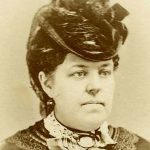 Tucked in among the hymnals and religious texts in Esther Howland’s father’s stationery and bookstore were valentines of different qualities, some of them expensive, elaborately decorated pieces imported from England. A direct descendant of the Mayflower Pilgrim Howland family and thus with curiosity and determination in her lineage, she proceeded to make her own line of these seasonal greeting cards after finishing her degree at Mount Holyoke College. Stocking up on fine lace, fancy paper, and lithographs for cut-and-paste artwork, she opened a workshop in her home at 16 Sumner Street, hiring first her friends to make the cards in assembly-line fashion and second her salesman brother to sell the new product line. A red H on the back of a card often distinguished a Howland product from the competition. Within a year sales had doubled. By 1884 she claimed that the business was pulling in close to $100,000 annually (over three million dollars in 2024) and the volume of production necessitated a move out of the house, to a commercial space at Harrington Corner downtown. Among her innovations was engineering a pop-up valentine constructed of multiple layers of materials. Numerous valentines from Howland’s 19th century venture are now in the collection at the American Antiquarian Society, the Metropolitan Museum of Art in New York City and the Museum of Worcester.
Gloria Hall, Public Arts Administrator. Preservationist. Placemaking Leader.
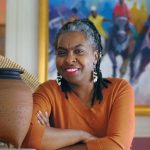 Gloria Hall connects people to place.
Reared in a small rural southern Georgia town by the 1st post slavery generation, she developed an early connection to African culture and history that shaped her life’s work. She went on to earn a Bachelor of Science in Sociology from Northeastern University and a Master of Arts degree in Historic Preservation from Goucher College.
In the late 1980s, Hall made Worcester her home — and the city became her canvas.
Through public art and preservation, she has illuminated overlooked histories and strengthened Worcester’s cultural identity. Her transformative projects include the Abbey Kelley Foster Commemorative Sculpture, the African American Festival Series, Art in the Park: Worcester, Art in the Yard: Oxford, Historic Resources With Uncomfortable Histories, and Taking Steps: Recognizing 19th Century African American Abolitionists, Entrepreneurs and Families.
Her work ensures that public spaces reflect the full story of the community — past and present.
Hall’s impact has earned her numerous honors, including the Worcester Telegram & Gazette Community Vision Cultural Enrichment Award, the YWCA’s Katherine F. Erskine Award in Arts & Humanities, the Harvey Ball Smile Award, and The Women’s Union Award recognizing her significant contributions to women and families across Massachusetts.
Gloria Hall has reshaped Worcester’s landscape — making its history visible, inclusive, and deeply rooted in community.
Gertrude Halstead, Holocaust Survivor
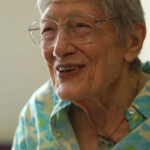 Gertrude Halstead was born Gertrud Bendheim in Germany in 1916. As a young woman she watched the breaking up of her family as they fled the Nazi regime. Halstead headed to France where she ended up interned in Camp Gurs with about 4,000 other German Jewish refugees. She leveraged bilingual skills in German and French to become an interpreter for camp officials who later signed release papers that she had boldly prepared for herself. Fleeing through France and Spain to Portugal she found herself at the western end of the continent, out of money and in tears. A kind stranger loaned her money while she waited for passage to the U.S. on S.S. Excalibur, one of the last passenger ships out of Europe during World War II. 1 he lost almost all her family in the Holocaust. In America she married, raised a family and led a quiet life of service (teaching, social work and counseling) for decades before discovering her talent for poetry in her fifties. She had joined workshops and honed her skills over the years before moving to Worcester in 1994 and becoming a first-time published poet in her 90s. She was twice nominated for a Pushcart Prize and accepted the honor of becoming the city’s first poet laureate in 2008. Describing her writing process, we see a woman of patience and humility: “I usually let it rest for a while, pick it up again, look at it, change it … the process takes time, I don’t rush it. Each poem I find has its own time frame.”
Zara Cully, Actor.
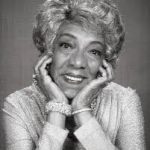 Zara Cully was one of the oldest children in a family of ten siblings full of performing arts talent. All of them played a musical instrument and some excelled, like their father who was music director of Worcester’s AME Zion Church and their brother Wendell who played trumpet with, among others, Cab Calloway and Duke Ellington. Cully first gained fame as an elocutionist, a person who has studied the art of public speaking in which gesture, vocalization and delivery are perfected. She was the first African American graduate of the Worcester School of Elocution. “1 guess God gave me the talent,” she once told an interviewer. “As a little bittie girl I had a photographic memory. I could take a poem of 22 verses, read it over, and get right up and recite it.” She moved to Florida as a young woman and there became active in the drama community as teacher, writer and performer but left because of the pervasive racism still rampant in the South at that time. “It was a traumatic experience,” she recalled. “I met with such violence and things and I was always having conflicts because I couldn’t take it. If I’d been a man I guess I would have been lynched.” She moved to Los Angeles where she landed many film and television roles, the most famous of which was her multi-year run (1975-1978) as Mother Jefferson on The Jeffersons, a groundbreaking and hit CBS situation comedy. She had previously introduced the character in one of television’s most famous sitcoms, All in the Family. Upon her death in 1978 the cast and crew celebrated her life, among them legendary producer Norman Lear. She left behind fifty years of acting credentials on the stage, the big screen and the small screen. She was posthumously awarded an NAACP special Image Award on June 9, 1978.
Linda Cavaioli, Former Executive Director, YWCA Central Massachusetts
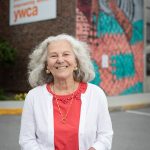
Linda Cavaioli was born in 1954 as a second-generation Italian American immigrant in Leominster, Massachusetts.
Cavaioli received her bachelor’s degree in social services from the University of New Hampshire.
She worked at United Way for sixteen years, where she focused her work on bringing resources to community-based agencies to solve Worcester’s most urgent problems.
After graduation with an MBA from Clark University, Linda Cavaioli became the new CEO of YWCA with a mission of empowering women and girls and eliminating racism. This was her passion and guides her today. The strength of the YWCA is to collaborate with like-minded community partners to address inequity of access and power.
She felt her life experiences of raising five children with partner John Medbury helped to enrich her work and education.
Currently Cavaioli serves on the board of Quinsigamond Community College Foundation, Notre Dame Academy and 2Gether We Eat.
After retirement, Cavaioli continues to work for race and gender equity and raise up others to join in this important work.
Etel Haxhiaj,
Grassroots Activist. Public Servant. Social Justice Advocate.
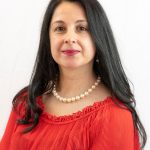
Etel Haxhiaj was born in 1980 in Vlore, Albania. She fled Albania to Greece with her parents and grandmother during Albanian’s civil unrest in 1997, where they lived as undocumented refugees. In 1999, Etel immigrated to the United States with her parents. She has called Worcester home since 2001, arriving here as a new American with the opportunity to complete her undergraduate and graduate studies at Clark University.
Since arriving in Worcester, Etel has chosen a life of service, investing back in the City she calls home. She served as the District 5 City Councilor for four years advocating for safe and affordable housing, homelessness eradication, road safety, immigrant rights and government accountability. Her work and advocacy on housing and homelessness spans local, state and national levels.
Her passion for affordable housing advocacy led her to co-found and co-lead the Worcester Affordable Housing Coalition in addition to leading efforts on the City Council to adopt Worcester’s first inclusionary zoning ordinance and push housing and homelessness at the top of the City Council agendas.
For the past two decades she has served Worcester and youth across the state, as mentor, supported families in public housing and family emergency homeless shelters, and organized mothers to fight for a livable climate for all our children. She continues her advocacy and work advocating for immigrant rights and standing up for her immigrant neighbors under attack.
Judith Smith-Levin, Police Officer
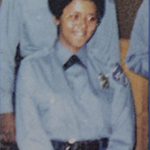 Judith Smith-Levin was born in Chicago in the mid-1940’s, and later moved to Worcester. The 1970s were a time when women in policing were nearly unheard of. However, this did not stop Judith from becoming the first uniformed female patrol officer in the Worcester Police Department. She achieved this by scoring the fourth-highest in the entire state on the police exam. Before policing, she had worked as a journalist in Chicago covering crime and law enforcement, where she often found herself reporting on the very barriers she would eventually shatter. She applied to the police academy in 1974 as a single mother driven by pure determination and the vision that she could open the door for others like her.
As one of the first Black women in the department, she entered a world where none like her had stepped before. She faced resistance from colleagues and the public, yet she carried herself with conviction. Every patrol shift, every badge she wore was a statement that women could serve and lead in spaces where throughout history they’d been excluded.
When Judith left policing, she began to turn her work experiences into stories similar to those she witnessed in uniform. Her novels Do Not Go Gently (1996), Hoodoo Man (1998), Green Money (2000), and Reckless Eyeballin’ (2001), blend mystery with realism. Her protagonists became an extension of herself- usually a Black woman navigating a world that underestimated her. Critics praised her work for bringing authenticity to a genre dominated by white male detectives.
Beyond her police work and writing, Judith also owned a bookstore. Surrounded by shelves filled with the voices of others, she created a space for her own stories. Her fiction blurred the line between art and autobiography. Through her work, she was effective in portraying injustice, and the way she celebrated the humanity of her characters reflected the life she lived.
Even after her passing in 2009, Judith Smith-Levin’s influence continues to reverberate through Worcester’s history and literature. Through her accomplishments, she was able to give women of color a mirror in which to see themselves not as side characters, but as the heroes of their own stories.
Bethany Veney was born a slave on James Fletcher’s plantation in Luray, Virginia in 1815.
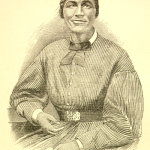
She had a daughter by her first husband, identified in this narrative as Jerry, and a son by her second husband, Frank Veney. She served a number of different masters, and was separated from her family for a time before being sold to a northern businessman, G.J. Adams, who freed her and her son. Veney worked for Adams and his family in the North. After living for a short time in Providence, Rhode Island, Veney settled in Worcester, Massachusetts, with her daughter and three grandchildren.
Bethany Veney published The Narrative of Bethany Veney, a Slave Woman in 1889, over twenty years after slavery was abolished. It includes details of her childhood, incidents that occurred while serving various masters, the way she received her freedom, and her new life in the North. Although the work is organized chronologically, one of the chapters, “Religious Experiences,” is thematic. In it, Veney gives a brief account of her own religious conversion and stresses the importance of her faith. The narrative concludes with letters from two clergymen, the first emphasizes the sinfulness of slavery, while the second confirms Bethany Veney’s strength of character.
Deborah Hall, CEO, YWCA Central Massachusetts | Founder, Worcester Black History Project | Equity Advocate | Cultural Worker
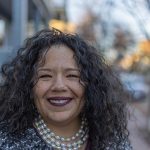 Debbie Hall is a community leader, advocate, and nonprofit executive whose work is grounded in equity, empowerment, and human dignity.
Born and raised in St. Louis, Missouri, Deborah grew up in a multiracial family at a time when interracial marriage was still illegal. Her early experiences shaped her commitment to challenging barriers and creating more equitable and inclusive communities.
Deborah earned a Bachelor’s degree in Political Science and African American Studies from Washington University in St. Louis and a Master’s degree in Nonprofit Management from Worcester State University. Throughout her career, she has worked alongside individuals and families experiencing domestic violence, homelessness, and substance use, helping people move toward safety, stability, and opportunity.
In 2018, Deborah founded the Worcester Black History Project, an initiative dedicated to preserving, documenting, and elevating the history, stories, achievements, and contributions of Black people in Worcester. The project works to ensure that Black history is recognized as an essential part of the broader history of the city and is accessible to current and future generations.
In 2021, Deborah became the first Black woman to lead the YWCA Central Massachusetts in its 136-year history. As CEO, she advances the organization’s mission of eliminating racism, empowering women, and promoting peace, justice, freedom, and dignity for all.
In 2023, Governor Maura Healey and Attorney General Andrea Campbell appointed Deborah to the Massachusetts POST Commission, where she applies her expertise in community leadership, equity, violence prevention, and advocacy to statewide efforts to strengthen professional standards and accountability in law enforcement.
In 2024, she was appointed to the Cultural Economy Advisory Council, contributing her leadership and community perspective to efforts connecting culture, creativity, history, and economic opportunity across Massachusetts.
In 2025, Deborah was named among the Worcester Business Journal’s 100 Most Powerful leaders and received the inaugural Black Excellence Award in Worcester, Massachusetts, recognizing her leadership and contributions to the community.
Across her career, Deborah Hall has championed equity, preserved and elevated Black history, empowered women, supported individuals and families facing significant challenges, and helped create pathways toward greater opportunity and inclusion.
Her leadership reflects a lasting commitment to community, justice, history, and the belief that every person deserves the opportunity to thrive.
Robyn Kennedy, MA Senator and former YWCA Staff
 Robyn Kennedy was born and raised in Worcester. After graduating from Holy Name High School, she attended Assumption University for her undergraduate, then earned her Master’s in Public Administration from Clark University.
After completing her education, Kennedy applied her knowledge through her careers within the government.
At first, she worked as a Legislative Aide for State Senator Edward M. Augustus Jr., where she focused on issues such as healthcare, education, and human services. Later, she joined Governor Deval Patrick’s administration as Deputy Director of Appointments, then served in the Lieutenant Governor’s office as Deputy Chief. There she worked on state initiatives focusing on homelessness, housing, and veterans’ services.
Outside of the government, Kennedy also explored nonprofit leadership.
From 2016 until 2022, she served as the Chief Operating Officer for the YWCA Central Massachusetts.
While at the YWCA, she helped oversee early education programs, transitional housing, domestic violence services, and programs promoting health equity. Her leadership emphasized her commitment to creating a community that supports women, children, and families through opportunity and care.
In 2022, Kennedy ran for the Massachusetts State Senate representing the 1st Worcester District including the City of Worcester and the Towns of Boylston, West Boylston, Northborough, Berlin and Bolton. She won and officially took office in January 2023.
As a State Senator, her work mainly focuses on expanding childcare access, investing in public transportation, and improving equity in healthcare and education.
Kennedy’s continued commitments to the Worcester community and the 1st Worcester District create a positive impact that improves the way of life for many individuals.
Dorothea Lynde Dix (1802-1887) was the granddaughter of Elijah Dix, a prominent Boston physician and Dorothy (Lynde) Dix of a leading Worcester family.
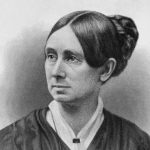
Born in Hampden, Maine, she was a humanitarian crusader for the mentally ill, superintendent of army nurses during the Civil War, friend and protegee of William Ellery Channing, the Unitarian leader. Her impassioned report to the Massachusetts legislature on the plight of the insane eventually resulted in the expansion of the medical facilities in Worcester to accommodate the state’s mentally ill, known today as Worcester State Hospital. This was the beginning of a nationwide change in the treatment and housing of the mentally ill.
Albina Osipowich, American swimmer
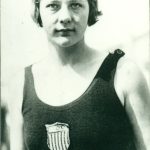 When fifteen-year-old Albina Osipowich inquired about diving lessons at the Worcester Boys Club she allegedly could barely swim the length of the pool. Instructors there watched a powerful stroke and “reserve strength” emerge as her lessons progressed. They at first imagined her excelling at distance swims but her amazing speed convinced them to shift her to sprints. She proceeded to win every woman’s freestyle title in New England then set her sights on the global stage. Six months before the 1928 Olympics she got influenza and was bed-ridden until four weeks before the Olympic trials. She rallied and was able to place fourth in the trials, thereby earning a place on the team. At the 1928 Olympics in Amsterdam she won a gold medal in the 100 meter freestyle and another in the freestyle relay with times in both races setting new world records. On the team with her was Johnny Weissmuller, another American multi-gold medal swimmer and later a popular actor known for playing Tarzan in a series of Hollywood movies. While only her family waved her off at the train station as she departed for Europe, when she returned it seemed that the entire city of Worcester including its mayor and Congressmen had gathered to celebrate her. There was a parade, there were banquets and an ice cream brand endorsement. After the hoopla, she returned to high school, sat at her desk and continued to excel in physics and chemistry. On school breaks she worked for the city’s Parks Department as a lifeguard. “I like swimming,” she said in an interview at the time, “and will probably do much more of it… But I do want to go to college.” She graduated from Pembroke College (the female student affiliate of Brown University) in 1933 where she eventually dropped competitive swimming to focus on her studies, taking up field hockey instead. Citizens of the city of Worcester had collected $4,000 in college scholarship money for their star athlete. After her brilliant athletic career she served as Rhode Island’s director of women’s activities for the National Youth Administration, worked as a buyer for a department store, married a basketball player, raised two children and died too soon at 53 years old.
Arabella Tucker, Suffragette and Public Educator
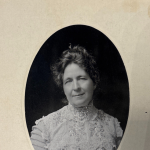 Arabella Tucker was born in the mid 1800’s in Worcester, Massachusetts. She was part of the first graduating class of the Worcester Normal School (what is now known as Worcester State University) in 1876. Tucker studied plants in the Worcester area. She published her book Trees of Worcester: A List of the Trees, Both Native and Introduced in 1894, which was a captivating and informative read for both beginners and experts in the field. In addition to her research and writing she taught classes at the Worcester Normal School for approximately thirty years from around 1888 to 1917. As the years went on, Arabella shifted away from teaching roles and more into administrative roles on various boards and councils such as Chairwoman of the School Committee and President of the Worcester Women’s Club. These roles helped uplift both her voice, and the voices of other women in the community.
Due to her deep love for and study of nature, Arabella Tucker was naturally an environmental activist. She fought for more public parks in the city, created public gardens, and taught children about nature. However, when she was snubbed for a position on Worcester’s Parks Commission because of her gender, she was catapulted further into the world of feminism and women’s advocacy. This scandal in addition to other factors contributed to her ambition, leading to her founding the Auburn Woman’s Club, promoting the establishment of the YWCA, and being one of the first women to vote in Worcester after the 19th amendment was passed.
By the end of her life, because of her contributions to the community, Arabella Tucker was a prominent figure in Worcester. Her place as a valued community member gave her the opportunity to speak on innovations being made to local schools, women’s rights, and the world at large. After she died, alumni from the Worcester Normal School created a memorial bench to honor her life and achievements.
Gladys Rodriguez-Parker
Community Leader • Advocate • Public Servant
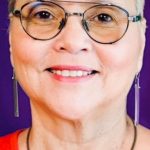
Gladys Rodriguez was born in Cerro Gordo, San Lorenzo, Puerto Rico, and proudly embraces her identity as a Jíbara, drawing strength from her Spanish, African, and Taíno heritage. Guided by family, resilience, and hard work, she has dedicated her life to public service and strengthening her community.
In the late 1960s, her family migrated to South Boston in search of a better future. As a young Puerto Rican girl, Gladys experienced discrimination during a period of intense racial and social unrest. On New Year’s Day 1970, Molotov cocktails were thrown into her family’s home in the Old Colony Housing Project, forcing them to flee and leaving them with nothing. This traumatic experience deepened her commitment to justice, dignity, and opportunity for all.
After settling in Worcester, Gladys became the first member of her family to graduate from high school. As a young single mother, she pursued higher education, earning a degree in History and Political Science from Worcester State College, now Worcester State University, and later a Master of Science degree in Human Services Management.
Gladys’s career has been defined by service and leadership. After supporting students at Quinsigamond Community College, she became executive leader of Centro Las Américas, expanding services for children, families, and seniors. Her accomplishments included establishing the organization’s first annual Latino Festival and helping create Worcester’s first bilingual homework center, named for educational advocate Idalia Vázquez. She also championed educational equity and greater community representation.
In 1996, Congressman James P. McGovern appointed Gladys as his first District Director, making her the first Puerto Rican woman to hold such a position within the Massachusetts congressional delegation. She served the people of Central Massachusetts alongside McGovern for nearly three decades.
Gladys’s journey reflects the resilience of her family, the strength of her heritage, and a lifelong commitment to creating opportunities for others and building a more inclusive Worcester community.
Susan Coghlin Mailman, Business owner/vocational schooling advocate

Susan Coghlin Mailman was born in July 1962 and grew up in Shrewsbury, Massachusetts, with her adoptive parents, Ted and Maureen Coghlin.
Susan graduated from Shrewsbury High School in 1980 and moved to Worcester for work and education.
She started working at a dry cleaner’s but quickly got a job as a bank clerk, where she became the head teller. While working, she took night classes at colleges in Worcester, including Worcester State, Quinsigamond, and Assumption. In 1985, she got her master’s in business administration at Northeastern University, then started working at her family’s electrical company. In 2000, her dad and his brother split the business into two; she took over as the owner of her father’s half in 2001, making her a fourth-generation business owner.
After becoming a business owner, she was invited to join the Board of United Way, which she accepted. Later on, she was asked to head the Board by Lois Green, who saw her ability to engage with people and ask questions. Lois Green became a mentor for Susan, pushing for her to be a bigger part of the community as she had a unique role to play as a woman business owner.
Sue’s passion for education and determined work ethic have helped her become a leader in the Worcester community and develop education in Worcester.
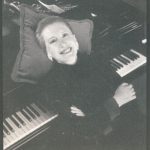 By the age of four, Barbara Carroll was at the family piano playing tunes she had heard on the radio or composing her own songs. Her father played both piano and trumpet and her parents supported her musical interests by connecting her with two local teachers with whom she studied classical piano from age 8 to 15. As a teenager, she was part of a group of local jazz fans known as the Classical High Gang. The training in classical music gave her a foundation upon which to build her jazz compositions. Fellow musician Don Asher described her as continuing her education playing for the public in “east side Worcester dives and turnpike roadh’ouses strung halfway to Boston,” taking what Carroll called “all the odd jobs a girl piano player gets to do.” After a short enrollment at the New England Conservatory she jumped into music full-time in New York City in the 1940s. She often applied for jobs using the first name “Bobby” to sidestep the sexism of that era, opening the door with a fake name and then keeping the jobs with her talent as both piano player and singer. “Gee,” she would hear, “you play good for a girl!” Carroll appeared on many early jazz classic recordings, headlined with Dizzy Gillespie and Art Tatum, joined Benny Goodman’s band and accompanied Stan Getz, Charlie Parker and Billie Holliday. She played — and often sang — on Broadway, with cabaret acts, at supper clubs and even at the White House, leaving a recorded legacy of more than thirty albums. “It never occurred to me,” she once said, “that it might be difficult for me to do these things. Number one because it was difficult to play jazz anyway. Second, because I was a female. That was relatively unheard of in those days.” She is now known as the First Lady of Jazz Piano.
Sarai Rivera, Faith Leader. Human Rights Advocate. Civic Leader
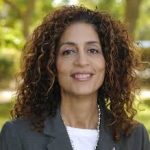 Born in the Bronx, New York, Rev. Dr. Sarai Rivera is an Afro-Boricua who moved to Worcester at age four and has called the city home ever since. She holds a Bachelor of Science in Psychology from Worcester State College, a Master of Social Work from the University of Connecticut School of Social Work, and a Doctorate in Urban Ministries from Gordon-Conwell Theological Seminary.
Rev. Dr. Rivera has served the Worcester community since 1988, building a career in community mental health, trauma-informed care, multicultural interventions, and social justice advocacy. Her work has focused on supporting marginalized communities and advancing equity through clinical practice, community organizing, and public policy.
In November 2011, she made history as the first Latina of Afro-Boricua heritage elected to Worcester’s municipal government. She served as District 4 City Councilor for 12 years, championing community needs and equity before retiring in December 2023.
Ordained in 2000, Rev. Dr. Rivera co-founded Christian Community Church with her husband, Rev. Jose Encarnacion, and serves as Co-Senior Pastor. She also helped establish the Shalom Neighborhood Center and co-founded Project Love Global Partnership, which advances community development, healing, and empowerment through initiatives in Haiti, Burundi, Kenya, and Uganda.
Through her continued work in ministry, public service, mental health, and international advocacy, Rev. Dr. Rivera remains committed to racial justice, human rights, and community empowerment in Worcester and around the world.
Abby Kelley Foster, an American abolitionist and radical social reformer.
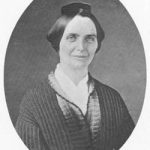 During her lifetime, Abby Kelley Foster followed the motto, “Go where least wanted, for there you are most needed.” A major figure in the national anti-slavery and women’s rights movements, she spent more than twenty years traveling the country as a tireless crusader for social justice and equality for all.
Foster was born into a Quaker family in Pelham, Massachusetts in 1811, and raised in Worcester, Massachusetts at a time when society demanded that women be silent, submissive and obedient. After attending boarding school, she held teaching positions in Worcester, Millbury and Lynn, Massachusetts.
In Lynn, she joined the Female Anti-Slavery Society, where she became corresponding secretary and later, a national delegate to the first Anti-Slavery Convention of American Women in 1837. The following year, Foster made her first public speech against slavery, and was so well received that she abandoned her teaching career and returned to Millbury. There, she founded the Millbury Anti-Slavery Society and began lecturing for the American Anti-Slavery Society.
During the next two decades, Foster served as a lecturer, fundraiser, recruiter and organizer in the fight for abolition and suffrage. In 1850, she helped develop plans for the National Women’s Rights Convention in Massachusetts. There, she gave one of her most well-known speeches, in which she challenged women to demand the responsibilities as well as the privileges of equality, noting “Bloody feet, sisters, have worn smooth the path by which you come hither.”
In 1854, Foster became the chief fundraiser for the American Anti-Slavery Society, and by 1857, she was its general agent. Through the American Anti-Slavery Society, Foster continued to work for the ratification of the fourteenth and fifteenth amendments.
In her later years, once slavery was abolished and the rights of enslaved people were guaranteed, Foster focused her activism primarily on women’s rights. She held meetings, arranged lectures, and called for ‘severe language’ in any resolutions that were adopted. In 1868, she was among the organizers of the founding convention of the New England Woman Suffrage Association, the first regional association advocating woman suffrage. Foster’s efforts were among those that helped lay the groundwork for the nineteenth amendment to the U.S. Constitution.
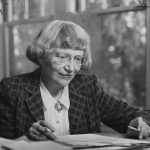 One of the city’s most celebrated authors, Esther Forbes won a Pulitzer Prize, a Newbery Medal, an O. Henry Prize, and was the first woman to be elected to the American Antiquarian Society, a testament to her deep dives into history. Moving from nearby Westborough to Worcester as a young girl she came and went from the city over the years, with stints away in Wisconsin and New York City as she pursued higher education and employment in her field. Writing was her passion from childhood, with a talent so advanced that grade-school teachers lectured her about plagiarism. By her late twenties she had landed a job in the editorial department at Houghton Mifflin. Soon she was writing books of her own, first fiction, then non-fiction, including a groundbreaking profile of Paul Revere (Paul Revere and the World He Lived In, 1942), a project that earned her a Pulitzer. The children’&_ book Johnny Tremain (1943) remains one of her most famous works. She spent many hours at Worcester’s American Antiquarian Society conducting research for her books, often joined there by her mother, also a published author. Of the craft of writing she once said: “It’s something like putting an octopus to bed.”
Stacey Luster, J.D., Education and Government Attorney
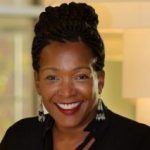
Stacey Luster is a third generation Worcesterite, who secured her place in Worcester’s history by becoming the only African American woman to be elected to the Worcester City Council as well as the only African American to be elected President of Mechanics Hall, where she spearheaded the inclusion of portraits to honor the lives and legacies of four 19th Century Black Americans who impacted social reform in Worcester and beyond.
Stacey Luster lived in Great Brook Valley when she attended Clark Street School and Plumley Village when she graduated from South High School at age 16. Stacey Luster attended St. John’s University in New York, earning a BA in Government and Public Administration and Boston University School of Law, where she earned a Juris Doctorate. Stacey Luster has also earned professional certifications from Harvard University in Negotiations and Executive Leadership and from Cornell University in Mediation.
Stacey Luster is an attorney, mediator, educator, community leader and trusted confidant with over 30 years of experience advising Presidents, CEOs as well as elected and appointed officials. In addition to teaching Education Law to school leaders, Stacey Luster has worked at all levels of public education including the Worcester Public Schools, Quinsigamond Community College, the Massachusetts Board of Higher Education and Worcester State University.
Stacey Luster is the co-founder of the Worcester Future Teachers’ Academy, the Black Excellence Academy, and founding board member of the Worcester Cultural Academy Public Charter School.
Currently, Stacey Luster is the Vice President for Personnel Services and General Counsel at Fitchburg State University, Director of the Malcolm X and Dr. Betty Shabazz Memorial and Educational Center, and a Director and Chairperson of the Community Reinvestment Committee for Country Bank.
Parlee Jones
Founder of OurStory Edutainment / Co-Founder The Village Worcester.
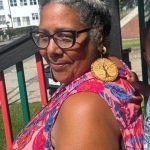 Parlee Jones is a dedicated community advocate whose journey has inspired hope across Worcester.
Parlee was born in Leominster, Massachusetts on March 4th, 1966. She grew up in Worcester in the Bell Hill neighborhood. She spent 10 years living in Brooklyn, NY where she gained knowledge of self. She had two children before returning back to Worcester in 2000.
Jones returned to Worcester to provide a safer and more supportive environment for herself and her children. She was able to find stability living with her sister before finding her own home and stepping into the role of shelter advocate at Abby’s House.
Parlee served as a Shelter Advocate for over seventeen years, working with women and families who were experiencing homelessness, addiction, mental illness, and domestic violence.
Her dedication and kindness led to Jones being awarded the 15th annual Renaissance Award from the Greater Worcester Community Foundation in 2019.
Beyond her role at Abby’s House, Parlee is the founder of OurStory Edutainment, an educational organization aimed at empowering marginalized communities by putting on events that allow them to learn about their history and help them come together as a community.
She is also the co-founder of The Village Worcester alongside her daughter, Sha-Asia Medina. Their mission is to create an Afrocentric learning and healing environment rooted in racial & social justice and cultural celebration through programs like Revolutionary Reading, The Village Marketplace, Community Check-Ins, etc.
Parlee Jones’ advocacy for social justice through self-love, knowledge, and compassion inspires those within the Worcester community.
Ettie Len Toy Chin Hong
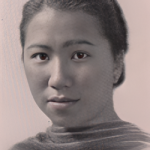 Ettie’s father Henry I. Sheu Chin ran multiple businesses in Worcester: laundry, market, restaurant. At North High his eldest daughter Ettie — the first Chinese woman born in the city — was an honors student, field hockey player, graduation speaker (1931) and scholarship recipient to Smith College. One of her brothers in this family of achievers, then attending Yale himself, allegedly proclaimed: “No sister of mine is not going to college!” At Smith, she excelled at fencing while studying history, and next earned a master’s degree in physical education from the University of Michigan. She took a job as faculty at Ginling College in China during the Japanese occupation (1937-1945), a bold move not only for a person who spoke very little Mandarin but also given the turmoil and wartime violence in the region. The college had to pick up and move from Nanjing to Shanghai to Chengdu, with Ettie among those in transit for two months by train, bus, and riverboat, over 2,500 miles during Japanese air raids, taking refuge in rice paddies and sleeping next to pigsties. Once settled in Chengdu she taught physical education until 1944, showing faculty how to play badminton, refereeing volleyball games, instructing in track & field, dance, gymnastics and other sports. She returned to the U.S. and to Smith where she taught physical education until 1953 and continued public service as a cultural ambassador between Asia and America.
Sponsors
Suffrage Sponsor

Legacy Sponsor

Reformer Sponsor
Sue Mailman
Hazel Berry
Kim Dawkins
Community Sponsor
Wendy Andrews
Linda Cavaioli
Patty Eppinger
Debbie Hall
Nellie Toney